opengear
SECURE REMOTE ACCESS OF YOUR CRITICAL NETWORK RESOURCES
Data centers are the backbone of today’s digital economy. As businesses expand their services and rely more heavily on connected infrastructure, the performance, security, and resilience of networks are mission-critical.
Opengear’s latest research report reveals an urgent reality: network outages are happening more often, causing greater disruption, and costing organizations millions.
This global study surveyed more than 1,000 CIOs, CSOs, and network engineers across the United States, United Kingdom, France, Germany, and Australia to understand how IT leaders are addressing risk, investing in resilience, and adapting to increasingly hybrid and distributed infrastructure.
Here’s what we learned.
84% of IT leaders reported an increase in network outages over the past two years.
The financial impact is significant. Nearly one in three organizations reported losses of between $1 million and $5 million due to outages in the past year. Beyond the money, outages damaged reputations, disrupted operations, and eroded customer trust.
Takeaway: Outages are now regular business risks with major consequences for revenue and brand equity.
The survey revealed both technical failures and human error.
As enterprises manage hybrid IT environments that span centralized data centers, edge locations, and cloud services, the chances of disruption grow and recovery becomes more complex.
Takeaway: Outages often stem from preventable issues, but complexity magnifies their impact.
To reduce these risks, organizations are making targeted investments.
Together, these approaches strengthen infrastructure resilience:
Takeaway: AI, edge, and OOB form a resilient foundation for always-on operations.
Security risks are also growing as networks expand.
In response, IT teams are turning to:
Out of Band management plays a role here as well, providing visibility and control even when the production network is compromised.
Takeaway: Security and resilience are inseparable. Distributed networks demand both.
The findings are clear: outages are increasing, infrastructure is more complex, and the cost of failure is rising.
Forward-looking organizations are responding by:
Patrick Quirk, President and General Manager of Opengear, explains:
“Outages are no longer isolated events. They are happening more often, and the cost is hitting businesses hard. Complexity, aging infrastructure, human error, and cyber-attacks are all part of the problem. As organizations lean more heavily on data centers to power digital transformation, the stakes are higher than ever. An outage is not just downtime. It is lost revenue, lost productivity, and lost trust.”
Opengear’s research confirms what IT leaders already know: resilient infrastructure is no longer optional. It is the foundation of digital business, ensuring uptime, security, and continuity even as networks grow more distributed and complex.
From AI-driven automation that predicts and prevents failures, to edge computing strategies that reduce latency and avoid single points of failure, to secure Out of Band management that provides always-available remote access, the next generation of data center and network infrastructure is being built with resilience at its core.
Resilience is not an afterthought or a bolt-on. It is becoming a design principle that organizations are embedding into every deployment from the start.
Learn more: Download the full research report for complete findings and recommendations.
What causes most data center outages?
Opengear’s research shows the leading causes are device configuration changes (27%) and server hardware failures (26%), followed by power supply issues, cyberattacks, and software upgrades.
How much do network outages cost businesses?
Nearly one in three organizations reported financial losses between $1 million and $5 million in the past year, with additional costs tied to reputational damage and customer trust.
Why are network outages increasing?
Outages are increasing because IT environments are more complex and distributed, spanning data centers, edge sites, and cloud services, which creates more opportunities for failure.
What is Out of Band (OOB) management?
Opengear’s Out of Band management, also known as Smart Out of Band, is a secure, independent management channel that gives IT teams remote access and control of infrastructure even when the primary network is down.
How does Out of Band management improve resilience?
OOB management ensures uptime by allowing IT teams to diagnose, access, and restore systems remotely, reducing downtime during outages or cyber incidents.
How do AI and edge computing help prevent outages?
AI and machine learning predict and prevent failures through automation, while edge computing reduces latency and avoids single points of failure by distributing workloads closer to users.
Why is security a growing concern for data centers?
As organizations adopt cloud and edge strategies, the attack surface expands. Risks such as data breaches, insecure APIs, and compliance challenges require solutions like OOB management, which adds secure visibility and control even during an attack.
The best support experience shouldn’t start when something goes wrong. It should start the day you deploy.
That philosophy is behind one of the most significant updates we’ve made to the Opengear platform in years: the introduction of Foundation and Premium Support as integrated parts of every Opengear deployment. These tiers aren’t just a repackaging of what we used to offer. They represent a shift, a smarter, more scalable, and more predictable approach to supporting infrastructure at every stage of its lifecycle.
Historically, Opengear support was included as part of the hardware purchase, providing customers with essential access when they needed it. While that approach offered baseline coverage, it didn’t rely on formal SLAs or a tiered structure, so experiences could vary based on situation or urgency. As the market and customer expectations have evolved, so too has our support strategy.
Today, we’re introducing a more structured, transparent model with defined response times, extended warranties, and proactive care—complete with defined response times, extended warranties, and proactive service options. This shift brings the clarity and consistency that customers value when evaluating infrastructure partners. With Foundation and Premium Support, there’s no ambiguity: Customers can select the level of coverage that best aligns with their operational needs. Foundation includes built-in 8×5 regional support no matter what region you’re in, firmware updates, and advanced RMA. Premium enhances that experience with 24×7 access, accelerated escalation, and expert guidance on scripting, automation, and configuration—a combination that’s already resonating with mid-sized organizations seeking a more consultative, hands-on support approach.
In many ways, this shift brings us into alignment with what customers expect from any enterprise technology vendor. They want structure. They want accountability. And they want to know they’re getting value. That’s why the SLA-backed model matters. It sets a clear expectation and allows both sides to hold each other accountable. It also makes our offerings more consistent with how partners operate and sell support services.
Our original support model was informal and highly hands-on. That worked well when our customer base was smaller. That worked when we were small. Customers would call and speak to incredibly experienced engineers who could walk them through anything. But as we’ve grown, we’ve had to evolve how we deliver that same quality at scale. These new tiers help us do that, while also giving customers faster access to the answers they need.
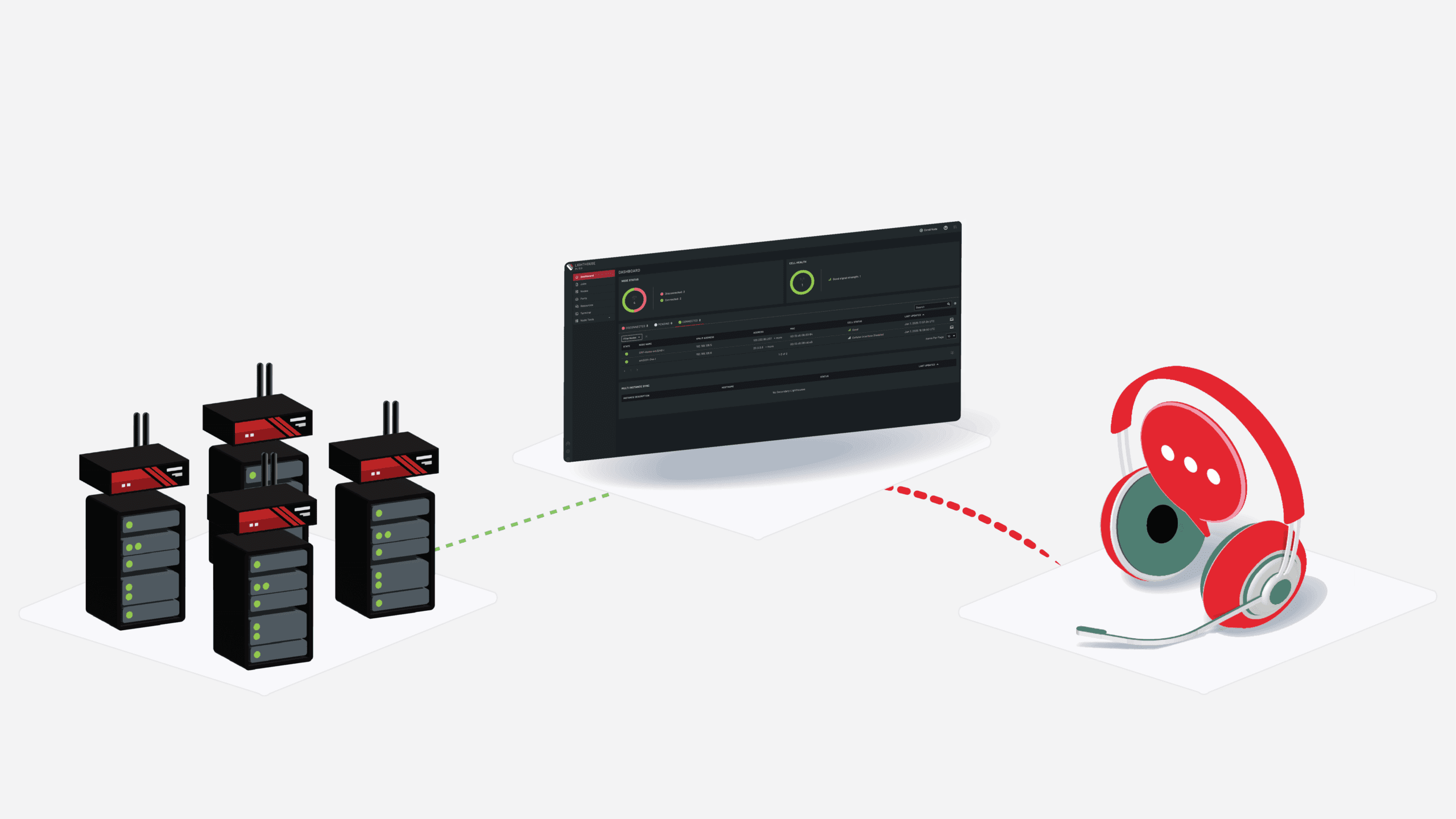
Support isn’t a bolt-on anymore. It’s part of the Opengear platform. And it doesn’t stop with people answering the phone. As Lighthouse evolves, we’re building ways to make the platform itself part of the support experience. Imagine faster troubleshooting, automated diagnostics, and support cases that start with actionable context already collected. That’s where we’re going.
We’re even exploring AI agents that can analyze syslogs in seconds, doing in moments what used to take engineers hours. That kind of intelligence not only changes how we support networks, it changes how fast teams can recover and move forward.</p
The bigger picture here is that we’re not treating hardware, software, and services as separate. We’re treating them as one platform designed to deliver the outcomes our customers care about: uptime, visibility, and control. Support plays a critical role in that, and Foundation and Premium make it tangible.
From better partner alignment to faster customer onboarding to smarter day-two operations, these changes are about more than just checking a box. They’re about evolving Opengear to meet the scale, complexity, and expectations of the networks we support.
And this is just the beginning.
Learn more about Opengear’s support solution.